What is Authentic Feng Shui? The Energy Vessel Framework
In many Western cultures, Feng Shui is often misunderstood as a collection of "lucky charms" or a mystical set of rules for interior design. However, the heart of traditional Feng Shui is not about superstition; it is a sophisticated, systemic approach to environmental psychology and spatial harmony.
To bridge the gap between ancient Eastern wisdom and modern Western life, I introduce the Energy Vessel Framework (EVF). This is not a new invention, but a cultural translation—a bridge designed to help modern readers understand the core traditional concept of "gathering Qi" (vitality) in a way that is logical, practical, and grounded in daily experience.
The Core Principle: A Home is a Vessel, Not Just a Space
The most fundamental concept in traditional Feng Shui is "Zang Feng Ju Qi" ─ Sheltering from the wind to accumulate Qi. In the language of EVF, we describe this as turning your home into a vessel.
A "space" is simply a physical area defined by four walls. But a "vessel" is something designed to hold, nourish, and protect its contents. Think of the difference between a flat plate and a deep ceramic bowl. You can pour water onto a plate, but it will quickly spill over. A bowl, however, is designed to contain and hold that water.
Many modern, "Instagram-perfect" homes are designed like plates. They are visually stunning but energetically shallow. You may find yourself in a beautiful living room yet feeling an unexplained sense of fatigue or restlessness because the room is not "holding" you; the energy is simply passing through.
Integrity and the Cost of "Leakage"
A vessel is only as good as its integrity. Even a beautiful ceramic bowl is useless if it has a hidden crack at the bottom. In traditional Feng Shui, we focus on securing boundaries to prevent the loss of energy; in EVF, we call this preventing Leakage.
Leakage is a loss of environmental efficiency. Imagine trying to keep a candle lit in a wind tunnel. No matter how high the quality of the candle, the environment is too unstable for the flame to settle. Similarly, when a home has structural "leaks," energy enters but cannot stay. This creates a "draining system" that leaves the occupants feeling unsupported and emotionally depleted.
The Paradox of Modern Openness: Chuan Tang Sha
One of the most common causes of leakage in modern architecture is the "Direct Through-Flow of Energy," traditionally known as Chuan Tang Sha.
In our modern world, we are obsessed with "openness"—large glass walls and open-plan layouts. While these bring in light, they often create an energetic tunnel where the front door is in a direct line with a back door or a massive window.
The rhythm of such a space is too fast. Life brings us opportunities every day—moments of clarity or new connections—but these need time to "settle" in our lives to become reality. A home that leaks is like a river flowing through a narrow canyon; it moves too fast to support a garden along its banks. By mending these boundaries, we are not just following a rule; we are reclaiming our peace.
Emptiness vs. Leakage: A Taoist Perspective
A major misconception about Feng Shui is that it requires filling your home with specific objects to "improve" the energy. In reality, authentic Feng Shui relies on a Taoist principle: Emptiness allows for reception.
Like a cup, your living room must have space to be filled. This does not mean your home must be empty or sterile, but it must be intentional. Every piece of furniture should serve a purpose in supporting your life rather than just taking up space.
It is vital to distinguish between "Emptiness" and "Leakage":
- Emptiness is a choice; it is the receptivity that allows the cup to be filled.
- Leakage is a flaw; it is the hole that prevents the cup from ever being full.
Practical Application: Creating a Center
How do we transform a space into a vessel? It begins with creating a Center—a focal point that draws people in and slows the flow of energy.
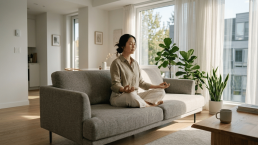
In the living room, this is typically the sofa area. If seating is scattered or faces away from each other, there is no "gathering". However, a U-shaped or L-shaped arrangement creates a "gentle enclosure". This physical arrangement creates a soft boundary where sightlines intersect and energy can finally settle instead of rushing through.
Conclusion: Returning to Authentic Roots
The Energy Vessel Frameworks is simply a modern lens through which we can observe ancient, time-tested truths. By viewing our homes as vessels, we stop looking at Feng Shui as a decorative trend and start seeing it as a way to nourish our vitality.
The goal of authentic Feng Shui is to create a space that is "fluid but not leaking". When your environment finally holds you, you provide your life—and your potential—the stable ground it needs to truly flourish.

2026 Fire Horse: Using "Inner Light" to Navigate the Speed of a New Era
As we approach the threshold of a new year, the digital space is often saturated with shallow personality labels. You have likely seen them: "Tigers are brave," "Rabbits are gentle." However, in classical Feng Shui and Chinese metaphysics, the Chinese Zodiac is not viewed as a label of who you are, but as an energy imprint—the specific environmental frequency or "energy climate" of the year you were born.
Understanding 2026, the Year of the Fire Horse (Bing-Wu), is not about simple fortune-telling; it is about mastering your personal energy flow, or Qi, in a year defined by unprecedented speed and intensity.
Identifying Your True Energy: The Li Chun Principle
Before exploring the energies of 2026, it is essential to correctly identify your zodiac sign. In traditional Chinese astrology, your sign does NOT change on the Lunar New Year. Instead, it transitions on Li Chun (立春), which marks the "Start of Spring."
Li Chun is based on the solar calendar and usually falls on February 3rd, 4th, or 5th each year. Always check the exact timing of Li Chun to identify your correct energy imprint.
Example: Year 2026
In 2026, Li Chun falls on February 4th.
Babies born before February 4, 2026 → belong to the Year of the Snake.
Babies born on or after February 4, 2026 → belong to the Year of the Horse.
Find Your Zodiac Sign Below:
(If your birthday is in early February, remember to verify the date of Li Chun for that specific year.)
- Rat: 1924, 1936, 1948, 1960, 1972, 1984, 1996, 2008, 2020
- Ox: 1925, 1937, 1949, 1961, 1973, 1985, 1997, 2009, 2021
- Tiger: 1926, 1938, 1950, 1962, 1974, 1986, 1998, 2010, 2022
- Rabbit: 1927, 1939, 1951, 1963, 1975, 1987, 1999, 2011, 2023
- Dragon: 1928, 1940, 1952, 1964, 1976, 1988, 2000, 2012, 2024
- Snake: 1929, 1941, 1953, 1965, 1977, 1989, 2001, 2013, 2025
- Horse: 1930, 1942, 1954, 1966, 1978, 1990, 2002, 2014, 2026
- Goat: 1931, 1943, 1955, 1967, 1979, 1991, 2003, 2015, 2027
- Monkey: 1932, 1944, 1956, 1968, 1980, 1992, 2004, 2016, 2028
- Rooster: 1933, 1945, 1957, 1969, 1981, 1993, 2005, 2017, 2029
- Dog: 1934, 1946, 1958, 1970, 1982, 1994, 2006, 2018, 2030
- Pig: 1935, 1947, 1959, 1971, 1983, 1995, 2007, 2019, 2031
The Anatomy of 2026: Bing-Wu (Fire Horse)
In the traditional system of Heavenly Stems and Earthly Branches, 2026 is the year of Bing-Wu. This is a rare and powerful combination that amplifies the Fire element significantly:
- Bing (Heavenly Stem): Pure Yang Fire—bright, bold, and sometimes explosive2.
- Wu (Earthly Branch/Horse): Symbolizes movement, speed, and a fierce sense of independence.
When these two meet, they create a high-heat environment that can accelerate our lives. However, Fire-rich spaces and times can also lead to restlessness or stress if not managed properly.
Synergy with Period 9: A Peak of Intensity
What makes 2026 truly unique is its alignment with Period 9, a 20-year cycle in Chinese metaphysics ruled by the Fire element. We are currently moving through a time of rapid shifts and high visibility.
The Fire Horse year acts as the energetic peak of this cycle. This "Fire on Fire" combination creates three major themes:
- Accelerated Pace: Life feels as if it is on fast-forward.
- Emotional Intensity: Stronger drive for freedom, but potentially lower tolerance for frustration.
- Push for Visibility: A cosmic invitation to step into the spotlight and be authentic.
Navigating the Heat: "Inner Light" Over External Speed
The greatest risk in a Fire Horse year is reactive burnout. When the environment is moving fast, our instinct is to match that speed. However, matching external speed with more speed often leads to chaos.
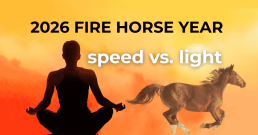
To stay in command of your "reins" in 2026, you must tap into the dual nature of Fire. Fire represents Speed, but it also represents Light (Vision). While the world moves fast, your greatest asset is your Inner Light—your power of insight and wisdom.
Strategies for Stability:
- Prioritize Seeing over Reacting: When situations flare up, use the Fire energy to illuminate the facts before moving.
- Build Anchors: In a high-mobility year, grounding practices—such as connecting with nature or creating a quiet, independent space—are essential for regulating your "internal thermostat".
- Radical Clarity: Don't confuse excitement with purpose. If you do not decide on your own direction, the year’s chaotic energy will decide it for you.
The 12 Signs in the Year of the Fire Horse
The Horse and Rat are the signs that will feel the "heat" of 2026 most intensely. The Horse experiences a surge of its own energy that requires immense self-discipline, while the Rat sits in direct opposition, necessitating a more cautious and grounded approach to avoid conflict.
- Horse: Your strongest year. Momentum is high, but pacing is required to avoid "overheating" and impulsive mistakes.
- Rat: Facing the year's energy directly; instability may arise. Avoid rushing into major financial or life decisions.
- Tiger & Dog: Harmonious with Fire. Tigers find new project openings; Dogs receive recognition for past efforts.
- Dragon: Flowing energy. Excellent for teamwork and building stronger social connections.
- Snake: Motivation boost, but stay practical to avoid financial stress.
- Goat: Gentle harmony. A good year for collaboration and steady, supported growth.
- Rabbit: Relationships become sensitive; communication is the key to balancing new connections.
- Ox: Internal pressure may feel heavy. Prioritize rest and consistent, slow progress.
- Monkey: Competitive energy. Stay strategic and avoid being drawn into unconstructive conflicts.
- Rooster: Opportunities mixed with pressure. You will be "seen" more, so maintain your internal standards.
- Pig: Quiet support, but plans may shift suddenly. Flexibility is your greatest strength.
Conclusion: Riding the Horse with Awareness
2026 is a force of nature. It cannot be controlled, but it can be guided. Your zodiac sign doesn't determine if your year is "good" or "bad"—it simply maps your personal rhythm against the cosmic current. By staying centered and leading with your Inner Light, you can use the speed of the Fire Horse to carry you exactly where you need to go.
Flying Star Feng Shui 2026: Navigating the Year’s Energetic Landscape
Flying Star Feng Shui is one of the most dynamic and time-sensitive branches of Feng Shui. At its core, it studies how energy changes across both space and time.
The Nine-Square Flying Star Feng Shui Map
Imagine dividing your home into a simple nine-square grid, much like a tic-tac-toe board. Each of these nine sectors contains a shifting energy pattern, traditionally called a “star.” These stars are not astronomical bodies, but rather symbolic forces that influence prosperity, health, relationships, and overall harmony.
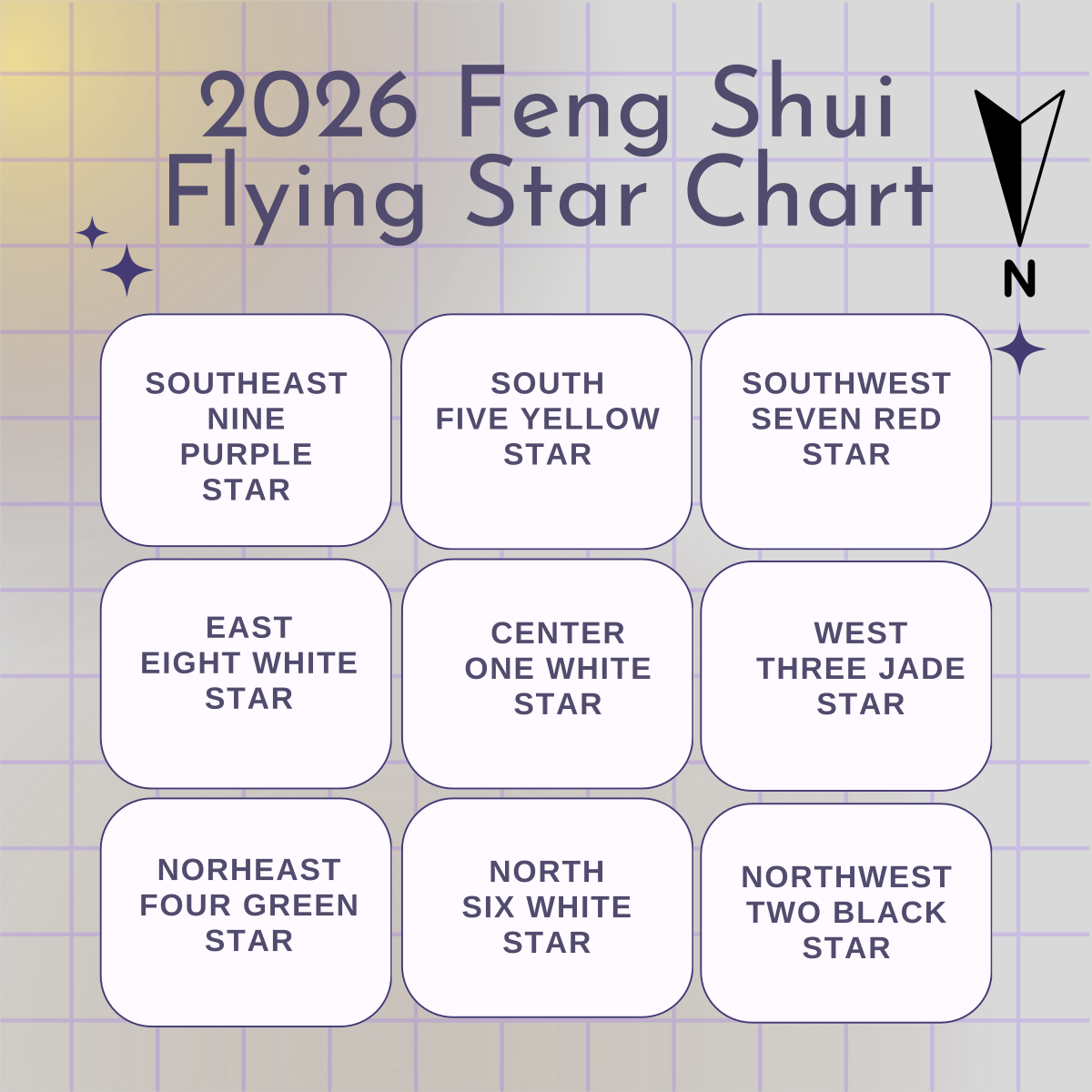
The Heart of Flying Star Feng Shui
Flying Star Feng Shui stands apart through its deep integration with time cycles. This is not a static system—each year and month, the nine symbolic stars fly to new positions within your home’s energy grid. Consequently, the influence of every space is in constant flux: a wealth-boosting area one year might bring health concerns the next. It is this dynamic nature that makes an annual analysis essential. By charting these shifts and applying timely enhancements or remedies, you align your living space with the year’s energetic current, actively fostering an environment of health, prosperity, and harmony.
2026: Your Energetic Blueprint
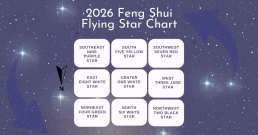
As we step into 2026, the annual Flying Star chart maps the new positions of these nine cosmic energies within your home. This blueprint is your key to navigating the year’s unique opportunities and challenges. The following guide details where each star resides in 2026 and its specific meanings—from the prosperity-bringing Eight White Star in the East to the challenging Five Yellow Star in the South. Understanding this layout empowers you to work with, rather than against, the year’s natural energy flow, turning insight into practical harmony.
The Center Palace: One White Star
The One White Star takes center stage in 2026, positioning itself in the heart of your home. As a water element star, it governs career advancement, social connections, and intellectual pursuits. When this beneficent star occupies the center palace, its influence radiates throughout your entire living space.
Energy Qualities:
- Career Growth: Enhances professional opportunities and networking
- Relationship Harmony: Strengthens bonds with colleagues, friends, and romantic partners
- Mental Clarity: Supports learning, concentration, and academic success
- Financial Flow: Facilitates steady income and business relationships
The Northwest: Two Black Star
The Two Black Star*settles into the northwest, carrying earth element energy associated with illness and physical depletion. This is particularly concerning as the northwest traditionally represents the patriarch and authority figures in Chinese spatial philosophy.
Energy Challenges :
- Health Deterioration: Chronic illness, fatigue, and weakened immunity
- Mental Exhaustion: Depression, anxiety, and emotional heaviness
- Elder Health: Particular impact on older family members
- Energy Stagnation: Creates sluggish, heavy atmospheric conditions
The West: Three Jade Star
The Three Jade Star positions itself in the western sector, bringing wood element energy that tends toward conflict and legal complications. This star requires attention to prevent family discord and external disputes.
Energy Challenges :
- Family Arguments: Increases tension between household members
- Neighbor Disputes: May create conflicts with neighbors or community
- Legal Entanglements: Risk of lawsuits or official complications
- Emotional Stress: Can affect liver health and emotional balance
The Northeast: Four Green Star
The Four Green Star takes residence in the northeast, carrying wood element energy that supports learning, creativity, and intellectual development. This star is especially beneficial for students and knowledge workers.
Energy Qualities :
- Academic Achievement: Enhances learning ability and exam success
- Creative Thinking: Supports artistic and innovative pursuits
- Communication Skills: Improves writing, speaking, and expression
- Cultural Arts: Favorable for literature, music, and cultural activities
The South: Five Yellow Star
The Five Yellow Star settles in the south, bringing the year's most challenging energy. Known as the "Great Misfortune" star, this earth element carries heavy, disruptive vibrations that require careful management.
Energy Challenges :
- Health Disruptions: May trigger illness, fatigue, or accidents
- Financial Setbacks: Risk of unexpected expenses and monetary losses
- Family Discord: Can create tension and conflict within the household
- General Obstacles: Brings delays, frustrations, and unforeseen complications
The North: Six White Star
The Six White Star commands the northern position, bringing metal element energy of authority, leadership, and beneficial connections. This star supports career advancement and social status.
Energy Qualities :
- Leadership Opportunities: Enhances authority and management capabilities
- Mentor Relationships: Attracts helpful guides and beneficial connections
- Career Stability: Supports steady professional growth and recognition
- Social Status: Improves reputation and standing in community
The Southwest: Seven Red Star
The Seven Red Star occupies the southwest, carrying the energy of a once-prosperous star now in decline. In 2026, this metal element star primarily manifests as interpersonal conflicts and security concerns.
Energy Challenges :
- Arguments & Disputes: Increases verbal conflicts and misunderstandings
- Financial Deception: Risk of fraud, theft, or being taken advantage of
- Health Issues: May affect respiratory system and oral health
- Legal Problems: Potential for litigation or official disputes
The East: Eight White Star
The Eight White Star claims the eastern sector in 2026, making this the year's most powerful wealth position. As the current period's ruling prosperity star, Eight White transforms the east into your home's financial powerhouse.
Energy Qualities :
- Material Wealth: Primary generator of financial abundance and investment success
- Real Estate Fortune: Particularly beneficial for property-related ventures
- Career Advancement: Supports promotion, authority, and business expansion
- Stable Success: Creates long-term, sustainable prosperity rather than quick gains
The Southeast: Nine Purple Star
The Nine Purple Star illuminates the southeastern corner with its celebratory fire energy. This star governs happiness, relationships, and all forms of joyful occasions, making the southeast your home's center of emotional warmth and social harmony.
Energy Qualities :
- Romance & Marriage: Enhances love relationships and marriage prospects
- Family Harmony: Strengthens bonds between family members
- Social Recognition: Brings celebration, achievements, and positive attention
- Creative Expression: Supports artistic endeavors and self-expression
Practical Application Guide for 2026 Feng Shui Space
Now that you understand where each star resides in 2026, the question becomes: how do you work with these energies in real life? The key insight is this: Flying Stars are annual flowing energies—you don't need to dramatically restructure your home, nor should you.
Rather than asking "What can I do for the Flying Stars?" ask instead: "What are my most important goals this year, and which stellar energies can support them?"
This approach honors both the ancient wisdom and modern living realities. You work with the energy rather than fighting against your existing space.
Identifying Your Priority Spaces
Start by identifying the spaces that matter most to your current life goals. Here are some common scenarios:
Your Home Office/Study (Wherever It May Be)
If your workspace is in the Northeast (Four Green Star):
Your study benefits from the scholarly Four Green energy—expect enhanced creativity, clearer thinking, and breakthrough insights. This is an excellent year for writing projects, learning new skills, or launching creative ventures. The wood element supports growth and fresh ideas.
If your workspace is in the Northwest (Two Black Star):
Your work environment carries heavier, more challenging energy this year. You'll need extra focus and emotional resilience for your projects. Consider this a year for deepening your practice, developing patience, and handling complex or difficult work with greater mindfulness. Don't expect quick wins—instead, build steady, thoughtful progress.
Your Living Room/Social Space
If your living room is in the Southeast (Nine Purple Star):
Expect your home to become a hub of social activity and celebration. This is perfect for hosting gatherings, family events, and meaningful conversations. Your living space naturally supports relationship building and joyful connections. Consider planning more dinner parties or family celebrations—the energy supports them.
If your living room is in the West (Three Jade Star):
Your social space may experience more tension or misunderstandings this year. This doesn't mean avoiding social contact, but rather approaching gatherings with extra awareness and patience. Focus on creating harmony through careful communication and avoiding controversial topics during family time.
Your Bedroom (Relationship & Rest)
If your bedroom is in the East (Eight White Star):
While Eight White carries excellent wealth energy, bedrooms serve a different purpose—rest, restoration, and intimate connection. Since the bedroom's function doesn't strongly align with Eight White's financial nature, you can simply enjoy the gentle benefit of having positive energy in your sleep space without needing to activate it specifically. The key principle: stellar energy works best when it matches the space's natural function.
If your bedroom is in the South (Five Yellow Star):
Your sleep and relationship space requires gentle handling this year. Focus on creating extra calm and avoiding arguments in this room. This becomes a year for deeper intimacy through quiet understanding rather than passionate expression.
Dancing with Time: Your Path to Harmony in 2026
As we navigate the shifting energies of 2026, remember that Flying Star Feng Shui is not about rigidly rearranging your life—it’s about awareness, adaptation, and alignment. Each star’s presence offers a unique opportunity to reflect on how your spaces serve your goals, relationships, and well-being.
Whether you choose to enhance a fortunate sector, soften a challenging one, or simply observe how the year’s energies unfold in your home, the true power lies in your conscious engagement with your environment. Let this year be an invitation to harmonize with time’s natural rhythm, creating a living space that not only shelters you but also supports your journey toward balance, abundance, and peace.
May your home be a sanctuary, and your path aligned with the blessings of 2026.
Understanding Qi and Energy from a Daoist Perspective
Intro:
In Chinese thought, Qi (pronounced “chee”) is often translated as “energy,” but in Daoist philosophy it refers to something far subtler—the living breath of the cosmos itself. This article explores how Daoism understands Qi not as a physical force, but as the connective rhythm between nature, body, and consciousness. It bridges classical philosophy and meditative experience, showing how “sensing Qi” becomes a path of harmony with life itself.
Preface: Sensing the Flow of Life in Stillness
In Daoist philosophy, Qi is far more than physical energy. It is the dynamic manifestation of the Dao—the unseen, ever-generative source of all existence. To “sense Qi” is not merely a skill or technique; it is a contemplative practice, a way of returning one’s awareness from the outer noise of the world to the quiet pulse of the cosmos. Through this process, the practitioner reconnects with the living origin from which all things arise.
The Ontology of Qi — The Bridge Between the Unmanifest and the Manifest
Daoism views Qi as the subtle bridge between Wu (the formless) and You (the formed). The Dao De Jing states, “All things under heaven are born from being, and being is born from non-being.” This non-being is not empty void, but a fertile potential—the Dao itself.
Qi emerges as the first movement of this potential, the breath of existence. As Zhuangzi wrote, “Throughout the universe, it is one Qi that flows.” Mountains, rivers, and human bodies are simply different condensations of this same living current.
To sense Qi, then, is not to chase something external. It is to realize the living continuity between self and cosmos. The human body, as a microcosm, constantly mirrors the rising and descending rhythms of Heaven and Earth. The Daoist ideal of unity between Heaven and Man is not mystical symbolism—it rests on the reality of Qi as a shared medium. When awareness turns inward from outer forms to inner flow, one begins to feel how personal life vibrates in resonance with the greater movement of the universe.
The Philosophy of Sensitivity — Xinzhai, Zuo Wang, and Wu Wei
If Qi connects Dao and the ten-thousand things, how do we walk across that bridge? Daoism offers a paradoxical answer: through non-action (wu wei). This does not mean doing nothing; it means suspending the interference of grasping thought so that natural awareness can unfold.
Xinzhai — Fasting of the Heart
As Zhuangzi says, “Only when the Dao gathers in emptiness—this emptiness is the fasting of the heart.” To sense Qi, the mind must first become empty, like a cup that can receive fresh water. When the heart is cluttered with desire, judgment, and intention, it loses its ability to perceive subtle movement. Xinzhai is a cleansing of perception, a return to clarity where the mind becomes a mirror reflecting the play of Qi without distortion.
Zuo Wang — Sitting in Forgetfulness
Deeper still is Zuo Wang, “to sit and forget.” It is to loosen the body’s heaviness, to quiet the tyranny of intellect, to drop all distinctions between self and world. In this state of luminous forgetting, one experiences the boundless communion where inner and outer Qi are one continuous breath. Forgetfulness, paradoxically, becomes the truest form of awareness.
Within this practice, relaxation (song) and stillness (jing) are no longer mere techniques—they are the physical and mental expressions of wu wei. Relaxation is the body’s non-doing; stillness is the mind’s non-grasping. Every genuine method of Qi cultivation arises naturally from these two foundations.
In the Dissolving of Sensation, We Meet the Dao
The purpose of sensing Qi is not to gain power or to cling to special experiences. As the Dao De Jing warns: “Those who strive, fail; those who hold on, lose.”
True sensitivity ultimately leads beyond the act of sensing itself. When personal Qi harmonizes with the greater field of Heaven and Earth, one enters the state the ancients called “the softness of an infant”—utterly responsive, yet free from resistance. The separation between “the one who feels” and “that which is felt” quietly dissolves. Awareness becomes the flow itself.
This is the deepest meaning of Daoist energy practice: through the body’s awareness, one awakens to the Dao.
In the gentle continuity of breath, in the stillness where body and mind fall away, we learn to yield to the natural order. And in that effortless harmony, we may glimpse the source that gives life to all things—formless, silent, and eternal.
To sense Qi, in the end, is to return to the Dao: to live each breath as a moment of ease and belonging within the vast rhythm of existence.
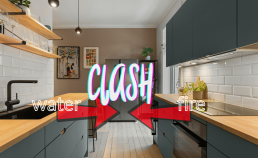
Kitchen Feng Shui: Balancing Fire and Water for Harmony
The Alchemy of the Kitchen
In the world of Feng Shui, few spaces hold as much power and promise as the kitchen. It is the primary site of transformation in the home—where raw, separate ingredients are alchemized into nourishment, where the heat of Fire is translated into the warmth of care, and where shared meals become the bedrock of family and community.
This was never more true than in ancient times, when the kitchen hearth fire symbolized life itself. To tend it was to ensure survival; to let it die was to lose warmth, connection, and the very pulse of the home. Look at your stove today. See it not as an appliance, but as your modern hearth—the crucible where your home's energy, or Qi, is ignited and revitalized daily.
And where there is Fire, there must also be Water. This brings us to the kitchen's most fascinating dialogue: the intimate dance between two primal, opposing forces.
The I Ching Dialogue: Beyond Opposition to Completion
At first glance, the stove (Fire) and the sink (Water) represent a fundamental opposition. In the I Ching, or the Book of Changes, Fire flames upward, while Water flows downward. They are the symbols of the cosmic polarities—light and dark, passion and tranquility, activity and repose.
However, the ancient wisdom of the I Ching invites us to see beyond mere opposition. It reveals that the most profound harmony is not found by eliminating tension, but by mastering the balance within it. This is perfectly captured in the hexagram Ji Ji, which translates to "After Completion."
This hexagram depicts Fire over Water. Imagine a cauldron: Fire below heats it, while Water within is contained and transformed. This is not a image of conflict, but of perfect, dynamic cooperation. The Fire's energy is not extinguished by the Water; instead, it is utilized to cook, warm, and create. The Water is not evaporated wastefully; it is contained and heated, becoming steam or soup, essential for life. This is the ideal state for your kitchen—a place where the upward, expansive energy of Fire and the downward, flowing energy of Water work in tandem to create something entirely new: sustenance.
When this balance is achieved, the kitchen becomes a generator of prosperous and harmonious Qi. When it is broken—when Water and Fire clash directly—it creates a state of conflict and stagnation, symbolized by the opposing hexagram, Wei Ji, or "Before Completion."
The Modern Hearth: Tending Your Home's Fire
Your stove is the undisputed heart of this energetic system. It is the Fire element in its purest form. A stove that is frequently used, radiating the scent of simmering soups, roasting vegetables, or baking bread, generates what Feng Shui calls "Prosperous Fire Qi." This energy fills the home with a sense of abundance, vitality, and warmth. It truly feels like the home has a heartbeat.
Conversely, a kitchen where the stove lies dormant and cold can make the entire house feel energetically flat, as if its vital center is missing. Simply using your stove regularly, even for brewing tea or heating soup, is a powerful way to activate this core energy.
The Flowing Well: The Role of Water
The sink represents the Water element—the power to cleanse, purify, and allow resources to flow. Just as a well provides essential water for a village, your sink is crucial for the kitchen's function. However, Water energy must be managed wisely. A slow-draining or leaky faucet is not just a minor inconvenience; in Feng Shui, it symbolizes wealth and resources slowly seeping away. Keeping your sink in good repair and the area clean and clear is fundamental to maintaining a healthy flow of Qi.
Practical Alchemy: Weaving Balance into Your Kitchen
How do we create the "Fire over Water" harmony in a modern kitchen? The goal is to foster respectful coexistence, not a direct battle.
-
- Create a "Neutral Zone": The most important rule is to avoid placing the sink and stove directly side-by-side or directly opposite one another. The ideal solution is to have a countertop, a kitchen island, or a section of cabinetry between them. This physical buffer acts as the "Earth element," which naturally mediates between Fire and Water, providing a stable, peaceful territory that prevents energetic clashes.
- Guard the Hearth's Stability: Be mindful of energetic "arrows" directed at your stove. Is it positioned directly in line with a hallway, a sharp corner, or a main door? This straight, rushing energy, called "Sha Qi," can disrupt the stable, gathering energy of the hearth. If this is the case, consider placing a hanging pot of a hardy plant (like rosemary or basil) on the counter nearby to gently diffuse the oncoming energy.
- Respect the Elemental Boundaries: Avoid placing a washing machine or dishwasher (intense Water energy) directly opposite the stove. Similarly, try not to air-dry wet laundry in a line facing the stove, as this creates a visual and energetic "river" of Water directed at the Fire.
Conclusion: Cultivating the Soul of Your Home
Your kitchen is the soul of your home, a microcosm where the cosmic dance of Fire and Water plays out daily. By understanding this relationship through the lens of the I Ching, we move beyond superstitious rules and into a deeper practice of intentional living. We learn to see our kitchen as a sacred cauldron, where the balance of opposing forces creates not just food, but the very energy of warmth, prosperity, and connection. When you nourish this balance, you do more than cook a meal—you cultivate the heart of your home.
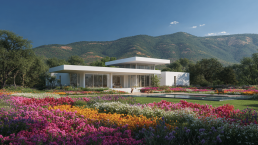
Backing and Bright Hall: Feng Shui Meets Environmental Psychology
Our sense of ease and agency in a place is not just about how it looks. It comes from feeling protected while being able to see clearly. In feng shui, this is the pairing of “backing” and the “bright hall.” In environmental psychology, it aligns with the Prospect–Refuge Theory.
Why Backing and Bright Hall Matter in Feng Shui
- Backing: stability, support, and protection. Traditionally a mountain or solid wall; in cities, a taller building or dependable structure forming a safe boundary.
- Bright hall: openness, visibility, and the gathering of qi. Ideally an open area in front, but not a straight rush—forecourt, garden, square, or deliberate indoor “negative space.”
Environmental psychology shows that people prefer spaces combining an open view to survey the environment (prospect) with a sense of sheltered protection (refuge). In short, backing corresponds to refuge; bright hall to prospect. When the two are balanced, ease and effectiveness peak.
On certain days, stepping into a room feels like taking a deep breath. Your shoulders drop, your attention widens, and you can both settle and look ahead. That sensation rarely comes from decoration alone. It comes from the quiet balance between protection and outlook.
Two Layers in Practice
- Outdoor posture
- Backing: a hill, tree belt, or taller building quietly holding the rear
- Bright hall: an open, calm foreground that gathers rather than scatters—green space, forecourt, pocket park
- Flanking: sides softened rather than squeezed, echoing the Azure Dragon and White Tiger as lateral guardians
- Indoor posture
- Bed: head to a solid wall; door visible from a calm angle; clear space in front as the room’s bright hall
- Desk: a supportive back (wall or high-back chair); sightline to entry without sitting in the line of fire
- Sofa: a sense of backrest; a conversational foreground neither cramped nor empty
Traditional language gives us a rich map. Backing is not only a mountain; it is any element that lends weight and shelter: a background wall, a high‑back chair, the hush of a fabric panel, the soft resistance of a bookshelf. The bright hall is not only a courtyard; it is the clear field before you: a view corridor, a pocket of deliberate emptiness, a surface that catches daylight and lets attention travel. Between them, movement bends rather than bolts—curves, diagonals, and layered thresholds gather energy instead of letting it shoot straight out the door.
Designers across cultures rediscover these truths again and again. The Four Guardians—the Azure Dragon and White Tiger flanking our sides, the Vermilion Bird before us, the Black Tortoise behind—are less about animals than about posture. They describe a stance in space: supported at the back, held at the sides, invited in front. Whether the materials are concrete and glass or earth and wood, places feel kinder when they follow this posture.
None of this is mystical in the pejorative sense. It is practical and humane. We want to be somewhere we can be ourselves without hiding, and look out without bracing. When a home or a street or a room gives us that, it lends us time—time to rest, time to think, time to meet one another without hurry. Backing and bright hall are simply two old names for a human constant: we thrive where refuge and prospect meet.
Translating Classical Terms into Design Language
- Backing = background wall, enveloping form, rear shielding, visual weight, acoustic buffering
- Bright hall = view corridor, foreground reserve, gathering zone, daylight face, low-obstruction flow
- Gathering qi = curved or looping flow that guides entry, avoiding straight lines that shoot energy out the door
- Dissolving sha (harshness) = buffer layers, turning interfaces, layered lighting and material transitions
The Feel of Safety Is Good Feng Shui
Backing and bright hall are not recipes of superstition but cross-cultural patterns of human spatial preference. When we balance refuge and prospect in contemporary design, spaces not only look better, they help people sleep more soundly, converse more deeply, and work with more focus. Feeling “protected yet able to see far” is the essence of good feng shui.
Mirrors in Feng Shui: Placement, Purpose, and Psychology
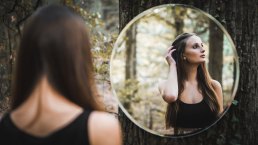
Walking past a mirror late at night can trigger an unexpected unease that seems to come from nowhere. Two seemingly identical rooms can evoke completely different feelings—one makes you deeply relaxed while the other leaves you restless and on edge. These subtle but powerful responses often trace back to something we rarely consider: where mirrors are placed in our environment.
Historical Origins: The Story Behind the "Demon-Revealing Mirror"
The mystical significance of mirrors in Chinese culture traces back to the Han Dynasty (206 BCE - 220 CE). Archaeologists have uncovered bronze mirrors in Han tombs—these weren't just daily tools but carried deep cultural meaning as protective objects that could ward off evil spirits.
Ancient Chinese believed mirrors could "reveal the true form of demons and spirits." This concept evolved into a central symbol in Taoist philosophy, where mirrors became instruments capable of unveiling truth and distinguishing reality from illusion. By the Ming Dynasty (1368-1644 CE), the "demon-revealing mirror" of the Taoist deity in Journey to the West elevated this concept to its peak, establishing mirrors as the ultimate symbol of "truth revelation" in Chinese culture.
The Essential Nature and Properties of Mirrors
In Five Elements theory, mirrors belong to "Metal" and carry strong yang energy. Ancient craftsmen used bronze mirrors to reflect sunlight for making fire—this practical function gradually evolved into the feng shui concept of "dispelling gloom and eliminating negative energy." The yang energy of mirrors is primarily expressed through illumination: reflecting light and increasing spatial brightness.
This fundamental understanding leads us to three essential properties that define how mirrors function in feng shui:
Yang Energy - Mirrors naturally carry yang energy, capable of enhancing brightness and life force in any space. This explains why proper mirror placement can make areas feel more open and energetic.
Reflection - The core function of mirrors is reflection—not just of light, but of energy itself. In feng shui, this property is used to "deflect harmful sha qi," redirecting negative energy away from inhabitants.
Revelation - This is the deepest attribute of mirrors. They don't just reflect the external world; they reveal the internal one. The ancient concept of the "demon-revealing mirror" actually refers to mirrors' ability to expose hidden truths about ourselves.
Proper Usage: Timing and Methods
Deflecting External Sha Qi
When your home faces sharp buildings, utility poles, or other sources of "sha qi," mirrors can reflect these negative influences. The key lies in the angle—avoid direct confrontation and instead use deflective reflection.
Expanding Small Spaces
Strategically placed mirrors in narrow entryways or hallways create visual expansion. But avoid positioning them directly facing main activity areas.
Improving Natural Light
Mirrors in poorly lit areas effectively increase brightness. Choose positions that can reflect natural light for best results.
Why Mirrors Shouldn't Face the Bed
Subconscious Disruption
When we gaze at ourselves in mirrors, we often experience a subtle questioning: "Is the person in the mirror really me?" This self-doubt creates unease at the subconscious level. During sleep, when our conscious defenses are lowered, we become more vulnerable to this "revelation effect."
Psychological Mechanisms
Modern psychology reveals complex human reactions to mirror images. French psychoanalyst Jacques Lacan's "mirror stage theory" explains how mirrors trigger internal conflicts in self-recognition. In bedroom environments requiring deep relaxation, this psychological tension disrupts sleep quality.
Environmental Psychology Evidence
Research shows that reflective surfaces in bedrooms increase "alertness stimuli," making it difficult for the brain to enter deep sleep states. Mirrors create a subconscious sense of "being watched," which conflicts with the "security" needed for quality sleep.
The Modern Scientific Value of Feng Shui Theory
The example of mirrors facing beds reveals how feng shui principles find scientific validation in contemporary research:
Environmental psychology confirms the profound impact of surroundings on psychological states. The feng shui concept of "qi field" can be understood today as "environmental atmosphere"—encompassing light, spatial perception, and psychological comfort.
Neuroscience research discovers that visual environments directly affect the brain's stress response systems. Feng shui's emphasis on "smooth sightlines" and "avoiding sha qi" actually creates environments that reduce visual stress.
Human factors engineering also validates how spatial configurations influence human behavior and feelings, aligning perfectly with feng shui's pursuit of "harmony between people and environment."
Light Sha in Modern Cities
In contemporary urban environments, glass curtain wall buildings create a new feng shui challenge—light sha.
Glass facades of high-rise buildings produce intense reflected light at specific angles, disturbing surrounding buildings and residents. From a feng shui perspective, this represents a modern version of the "demon-revealing mirror effect"—excessively strong reflective energy creating environmental imbalance.
Actual impacts include:
- Intense light entering interiors, affecting living comfort
- Long-term light interference causing eye fatigue and psychological irritation
- Abnormal indoor temperature increases, raising air conditioning costs
Personal coping strategies:
- Install adjustable curtains or blinds
- Apply frosted film to windows affected by light sha
- Rearrange interior layouts to avoid direct light exposure areas
Understanding mirrors as feng shui tools isn't about embracing mystery—it's about comprehending how they influence our psychology and environmental experience. When we understand the "why," we can use this ancient tool more wisely to create harmonious spaces in modern life.
Remember: any feng shui object isn't only decoration but a purposeful tool. Understand the purpose first, then determine placement. This way, mirrors truly become guardians of our living spaces rather than sources of interference.
The Five Sacred Principles of Yin-Yang
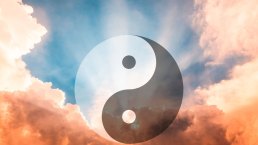
Remember that black and white embracing circle from our first article? You've already discovered the basic dance of Yin-Yang— not a battle between good and evil, but complementary partners creating life's beautiful rhythm. Now let's dive deeper into the mystery of how these forces actually work.
The ancient Chinese text I Ching (Book of Changes) teaches us: "One Yin, one Yang—this is the Way." This means Yin-Yang embodies the fundamental truth of everything in the universe. But what truths do they actually contain? Through millennia of observing heaven and earth, and our modern deep experience of life, we've discovered five core principles: Opposition, Interdependence, Waxing & Waning, Infinite Layers, and Transformation.
These principles don't just explain how nature works—they offer profound guidance for navigating your own life's changes, challenges, and growth.
First Principle: Yin-Yang Opposition
What is Yin-Yang Opposition?
In the Taiji symbol, black represents Yin and white represents Yang. The circle itself represents the universe, and Yin-Yang are the two fundamental substances—or phenomena—that compose everything. You can also think of them as two types of energy or life force.
The basic understanding of Yin-Yang begins with simple dualism: Yin and Yang are opposites. It's precisely through this opposition that each discovers the other's existence and meaning.
Opposition in the Natural World
Heaven and Earth: Heaven is Yang—vast, empty space with light air rising upward. Earth is Yin—solid matter, heavy and settling downward.
Day and Night: Daylight's brightness is Yang; nighttime's darkness is Yin.
Mountain and Water: Mountains are still and unmoving (Yin); water flows and dances with life (Yang).
Mind and Body: Our consciousness and spirit are Yang; our physical body is Yin.
These represent material forms of Yin-Yang opposition. But there are also abstract oppositions: good and evil, freedom and restriction, action and stillness.
Why Opposition Creates Life
Here's the beautiful truth: opposition creates dynamic tension, and from this tension comes innovation, growth, and new possibilities. After Yin and Yang clash and interact, they naturally settle into new forms of balance. This isn't destructive conflict—it's creative collaboration.
Think about it: without problems (Yin), there would be no solutions (Yang). Without questions, no discoveries. Without challenges, no growth. Opposition isn't something to avoid—it's the very mechanism through which life renews and evolves itself.
Second Principle: Yin-Yang Interdependence
The Sacred Dots
Look closely at the Taiji symbol: within the white Yang section lives a black dot, and within the black Yin section lives a white dot. A tiny black seed hides within the largest white area, while the largest black area also contains a small white seed.
This reveals Yin-Yang theory's most profound insight: when opposition reaches its extreme, it naturally contains the seed of its opposite. When Yin or Yang reaches its peak, it actually gives the opposing force an opportunity to develop.
"Solitary Yin Cannot Give Birth, Isolated Yang Cannot Grow"
This famous Daoist saying captures a fundamental truth: if the universe contained only a single phenomenon or energy—no conflict, no interaction—nothing would ever change. The universe would be lifeless and static.
There's no pure creation without foundation. Even the most brilliant idea (Yang) needs a material vehicle (Yin) to express itself. Even the most fertile soil (Yin) needs sunlight (Yang) to spark life.
Interdependence in Nature and Life
The Miracle of New Life: This is interdependence at its most direct and magical. New life emerges from the fusion and combination of two different energies—neither can create alone. It perfectly illustrates "interdependence" as the source of all creation.
Your Breath as Teacher: Every breath demonstrates this principle. Inhalation (Yang) and exhalation (Yin) form one complete cycle. Without thorough exhalation, you cannot take a deep inhalation. Without full inhalation, you cannot powerfully exhale. Each defines and enables the other.
Relationships as Energy Exchange: In healthy relationships, giving (Yang) and receiving (Yin) flow naturally between people. Someone who only gives eventually becomes exhausted and resentful. Someone who only receives finds their relationships gradually depleting. True nourishment happens in the natural flow between both.
Nature does not pursue purity or permanence. Instead, it weaves opposites together, generating life through tension, renewal through collapse.
This principle invites us to reflect: what if the very thing we resist contains the key to our growth? What if the darkness we fear carries the seed of awakening?
True harmony is not found by escaping opposition—but by seeing how deeply the opposites depend on one another to become whole.
Third Principle: Yin-Yang Waxing & Waning - Life's Natural Rhythm
The Seasonal Textbook
The most intuitive teacher of Yin-Yang waxing and waning is the grand rhythm of seasonal cycles:
Spring Equinox → Summer Solstice: Yang energy continuously grows (days lengthen, temperatures rise) while Yin energy gradually diminishes.
Summer Solstice → Autumn Equinox: Yang energy reaches its peak then gradually weakens, while Yin energy begins growing (nights lengthen, temperatures cool).
Autumn Equinox → Winter Solstice: Yin energy continuously grows while Yang energy diminishes.
Winter Solstice → Spring Equinox: Yin energy reaches its peak then gradually weakens as Yang energy awakens again.
Key observation: Though summer solstice is hottest, "one Yin is born." Though winter solstice is coldest, "one Yang awakens." Extreme points are turning points.
Cycles, Not Linear Progress
The essence of Yin-Yang waxing and waning reveals a dynamic universe governed by eternal fluctuation and cycles, where "when things reach their extreme, they reverse." This principle shows that extreme states inherently contain seeds of their own transformation—as Yang peaks, Yin arises, and vice versa—explaining turning points in history, destiny, and emotion. By highlighting cyclical rhythms rather than linear progress, it challenges modern pursuits of infinite growth, suggesting true sustainability lies in aligning with natural cycles. Ultimately, meaning emerges not from static endpoints but from wholehearted participation in the continuous rise and fall of energies, fostering awareness and growth within this flow.
For us, this means recognizing that times of intensity (Yang) will naturally give way to rest (Yin), and that stillness is not stagnation but preparation. It also challenges modern illusions of constant growth and relentless productivity.
To live wisely is to know the seasons within ourselves—to act when it is time to act, and to withdraw when it is time to rest. This rhythm is not a flaw in life. It is its music.
Fourth Principle: Yin-Yang Infinite Layers
The Nested Reality
Yin-Yang possesses the characteristics of layering, stacking, and containing. The I Ching's expression of Yin-Yang began with just one solid line and one broken line representing Yang and Yin. The stacking of Yin-Yang forms the eight trigrams; the stacking of trigrams forms the 64 hexagrams, used to understand complex phenomena.
Conversely, we can break down any complex phenomenon to discover its essential Yin-Yang nature.
The Taiji symbol's Yin-Yang shape expresses not only cyclical flow, but also the truth of nested layers—Yin within Yang, Yang within Yin, layers upon layers of embedding.
You Are a Living Universe
Taiji literally means reaching outward to infinity and inward to the ultimate essence. The great Taiji contains countless small Taijis. In Taiji philosophy, every thing and every life is itself a Taiji—therefore, humans are naturally small Taijis.
Your body is an exquisite holographic reflection, perfectly embodying the universe's Yin-Yang laws. The operation of our bodies, emotions, and consciousness represents a miniature display of cosmic operating principles. We ourselves are small universes containing Yin-Yang dynamic balance—complete in ourselves, yet also part of a greater whole.
The Human Microcosm
Spirit and Body: Human spirit is Yang—rising, always seeking to elevate and transcend. Human body is Yin—material and physical, giving us appetites and instinctual needs for food and intimacy. This creates the inner tension we all feel between spiritual and material aspects of our nature.
Connected to the Greater Pattern: Though human spirit and body seem to form their own complete system, as part of the universe we must harmonize with the greater Taiji. For example, our circadian rhythms naturally align with sunrise and sunset—directly corresponding to the universe's Yin-Yang waxing and waning.
The Web of Relationship
When viewing the world through Yin-Yang layers, we're not isolated individuals but participants in a dynamic, nested network of relationships. Our individual existence hasn't separated from the greater Self—we're connected to it.
This recognition naturally gives birth to reverence and gratitude toward all things, while also knowing our unique and significant (not small) place in existence.
We realize: taking good care of this "small Taiji" (ourselves) is our greatest contribution to the "great Taiji" (universe). Respecting and maintaining the great Taiji's harmony is also our deepest nourishment. This is the most simple yet most profound understanding of the Chinese concept "heaven-human unity."
Fifth Principle: Yin-Yang Transformation
The Path of Inner Alchemy and Harmonizing with the Universe
At the deepest level of Yin-Yang philosophy lies the potential for transformation—not just change, but a complete shift in how we relate to ourselves and the cosmos.
In Daoist thought, this process is called “inner alchemy.” It's the art of refining both body and spirit, not to escape the world, but to resonate more fully with the natural rhythms of the universe.
Body and Spirit: Two Energies in Dialogue
Yin represents the physical body—dense, grounded, and receptive. It’s the vessel through which we experience life: our breath, our blood, our instincts.
Yang represents the spirit—light, expansive, and seeking to rise. It carries our awareness, our aspirations, our desire to transcend.
Rather than seeing body and spirit as in conflict, Daoism invites us to recognize them as two aspects of one energy system, always seeking balance.
When these two forces are aligned, something remarkable happens: we begin to transform.
Two Paths of Energy Flow
In everyday life, most people experience Yin and Yang flowing downward—toward physical desire, reproduction, survival. This is not wrong; it’s part of life. But if we turn our awareness inward and upward—through breath, stillness, and intention—the energy begins to ascend. It nourishes clarity, wisdom, and a higher state of consciousness.
This is the essence of spiritual cultivation in Daoism. It's not about denying the body, but about purifying both body and mind so that they can reflect their original harmony.
- Through movement and breathwork (similar to yoga or qigong), we cleanse the body, releasing stagnation and heaviness.
- Through meditation and inner silence, we purify the spirit, letting go of emotional noise and limited thought patterns.
In time, this refinement leads us back to the origin—the pure state where Yin and Yang first emerged in unity.
Becoming a Resonant Being
Daoist texts speak of a figure called the Zhenren, or “True Person”—not a saint or guru, but someone who lives in complete harmony with the Tao, the Way of nature.
This ideal isn’t about perfection. It’s about becoming so deeply attuned to the rhythms of life that your very presence becomes a reflection of balance.
From this perspective, we are not isolated beings. Each of us is a microcosm—a small universe with the same Yin-Yang dynamics as the stars, the seasons, and the tides.
To care for ourselves—mind, breath, body—is to care for the cosmos. And to walk in harmony with the Tao is to return to who we truly are.
The Wisdom Path Forward
Mastering these five principles doesn't make life perfect—it makes you more skillful at dancing with life's imperfections. You learn that balance isn't a static state but a dynamic art. True harmony isn't the absence of opposites but the conscious collaboration with them.
This is the gift of Yin-Yang wisdom: not control over life's changes, but the ability to move with them gracefully, finding opportunity in challenge, connection in opposition, and continuous transformation in the midst of whatever circumstances arise.
You don't need to become someone completely different. You need to become more fully yourself—integrated, aware, and alive to the magnificent Yin-Yang dance that is your unique life expression.
What is Yin-Yang? Understanding the Dance of Opposites
The Ancient Secret Behind Life's Perfect Balance
Have you ever noticed how your most creative breakthroughs happen after periods of rest? Or how the calmest moments often follow life's greatest storms? You've actually experienced one of humanity's oldest and most profound discoveries—the principle of Yin-Yang.
Yin-Yang is the cornerstone of Chinese philosophy and Taoist thought, describing the universe's two fundamental forces that dance together in eternal harmony. These aren't just opposing energies—they're complementary partners, constantly flowing between dynamic interaction and peaceful balance. Ancient Chinese wisdom tells us that their interaction sparks new possibilities, while their balance allows all life to flourish.
This elegant concept emerged over three thousand years ago in China's sacred text, the "I Ching" (Book of Changes). Later embraced and developed by Taoist philosophers, Yin-Yang became the foundation for Traditional Chinese Medicine, Feng Shui, martial arts, and countless other practices that help us live in harmony with natural rhythms.
Decoding the World's Most Recognizable Symbol
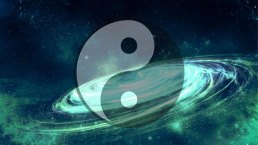
You've seen it everywhere—that perfect black and white circle that seems to swirl with life itself. The Tai Chi symbol isn't just beautiful; it's a masterpiece of visual philosophy that reveals profound truths about existence.
The Perfect Circle: This represents the wholeness of the universe—complete, infinite, and unified. Everything that exists is contained within this cosmic embrace.
The Flowing Boundary: Notice how the line between black and white isn't straight but curves like a gentle wave? This shows us that the boundary between opposing forces is never fixed. Just as dawn slowly melts into day and dusk gradually becomes night, all transitions in life are fluid processes, not sharp cuts.
The Sacred Dots: Here's where it gets beautiful—within the black section lives a white dot, and within the white section, a black dot. This reveals one of life's greatest secrets: Yin always contains the seed of Yang, and Yang always carries Yin within itself.
Think of it this way: even in your darkest moments, hope quietly grows within you. And in your brightest celebrations, there's often a whisper reminding you that "this too shall change." As the Chinese wisdom goes: "Flowers don't bloom forever, and fortune doesn't last a thousand days"—reminding us that all peaks naturally give way to valleys, and all valleys eventually rise to peaks again.
Nature's Perfect Choreography
Want to see Yin-Yang in action? Just step outside and observe the world's most elegant dance performance.
Daily Rhythms: Every sunrise and sunset demonstrates this cosmic principle. As daylight (Yang) reaches its peak at noon, the very intensity of that brightness begins calling forth evening's gentle darkness (Yin). Night doesn't suddenly appear—it emerges gradually from within the day itself, like that black dot within the white.
Seasonal Symphony: The four seasons paint Yin-Yang across the entire year. Spring arrives as Yang energy awakens, coaxing life from winter's sleep. Summer blazes with full Yang power—everything growing, blooming, reaching toward the sun. But at summer's height, Yin quietly begins its return through autumn's harvest and withdrawal, leading to winter's deep Yin rest. Then, in winter's darkest depth, Yang stirs again, and the eternal cycle continues.
Your Body's Wisdom: Even your breath follows this pattern—the active inhale (Yang) and the releasing exhale (Yin), the heart's contraction (Yang) and expansion (Yin). Your body inherently knows this dance because you ARE this dance.
Beyond Good and Evil: The True Nature of Opposites
Here's where Western thinking often gets confused: Yin and Yang are not good versus evil. They're not enemies locked in eternal conflict. They're dance partners, each making the other possible, each beautiful in its own way.
Darkness isn't evil—it's the restorative space where seeds germinate and dreams are born. Light isn't superior—it's the creative force that brings possibilities into form. Neither can exist without the other, and neither wants to eliminate its partner.
This understanding changes everything. Instead of fighting against life's natural rhythms, we can learn to flow with them. Instead of judging our quiet, reflective moments as "unproductive," we can honor them as essential Yin phases that prepare us for Yang periods of action and creativity.
Your Personal Yin-Yang Journey
Traditional Chinese Medicine teaches us that "the universe is a great Tai Chi, and the human body is a small Tai Chi." You're not separate from these cosmic forces—you're a living expression of them.
When your personal Yin and Yang flow harmoniously, you experience what the Chinese call "perfect health"—not just the absence of disease, but a vibrant sense of being exactly where and who you're meant to be. When they're out of balance, you might feel stressed (too much Yang), depleted (too little Yang), scattered (too little Yin), or stuck (too much Yin).
In your emotions: Joy and enthusiasm represent Yang energy, while calm reflection and peaceful rest embody Yin. Both are necessary, both are beautiful, and both deserve your respect.
In your daily rhythm: Learning to honor both your active, creative, social times (Yang) and your quiet, contemplative, solitary times (Yin) isn't just nice—it's how you stay connected to the fundamental rhythm that governs all life.
The ancient wisdom whispers: don't force, don't resist. Instead, develop the awareness to recognize which energy you need in each moment, and trust the natural intelligence that flows through you to guide your choices.

How to Read Qi in Your Home: A Complete Guide to Feng Shui Energy Assessment
Have you ever walked into a room and immediately felt uncomfortable, but couldn't explain why? Or perhaps you've experienced the opposite - entering a space that instantly made you feel calm and energized? What you're sensing is Qi energy, and learning to read it can transform how you experience your living space.
What is Qi Energy? Understanding the Invisible Force in Your Home
Qi (pronounced "chee") is the fundamental life force that flows through all environments in Feng Shui philosophy. Think of Qi as an invisible energy current that affects your mood, health, and overall well-being, even though you can't see or touch it directly.
According to ancient Chinese medicine, "When Qi gathers, life forms; when Qi scatters, life fades away." This principle means that spaces with strong, healthy Qi promote vitality and positive emotions, while areas with weak or stagnant Qi can leave you feeling drained or uncomfortable.
Every living being and space has its own unique energy signature or "aura." Your bedroom carries a different energy than your kitchen, just as different people emit different vibes. Understanding these energy patterns is the first step in reading Qi in your home.
Why Learning to Read Qi Matters for Your Home
Many homeowners struggle with spaces that "don't feel right" without knowing how to identify or fix the problem. By learning to assess Qi energy, you can:
- Identify areas of positive and negative energy in your home
- Understand why certain rooms feel more comfortable than others
- Make targeted improvements to enhance your living environment
- Create spaces that actively support your well-being
Reading Qi in Natural Environments: Learning from Nature
Before assessing your indoor spaces, it's helpful to understand how Feng Shui masters read energy in natural settings. Nature provides the clearest examples of Qi in action.
Plant Growth as Qi Indicators
Healthy vegetation is one of the most reliable signs of positive Qi. Areas where plants thrive and grow lush indicate abundant life force energy. Conversely, if you notice a patch of land where nothing grows despite favorable conditions, this suggests absent or negative Qi.
Professional Feng Shui practitioners also examine the shape and character of landscape features, reading the "personality" of mountains and terrain to understand energy patterns.
Animal Behavior and Energy Fields
Animals are natural Qi detectors. Birds instinctively build nests in locations with beneficial energy fields. Traditional Feng Shui includes a technique called "Ox Resting Ground," which involves observing where cattle consistently choose to rest - these spots indicate stable, nourishing Qi.
Water Flow and Energy Quality
Water features significantly impact Qi quality. Gentle, meandering streams that produce pleasant sounds create positive energy flow. However, turbulent, muddy water with sharp rocks indicates chaotic, aggressive energy that can negatively affect nearby spaces.
How to Assess Qi Energy in Your Home: A Room-by-Room Guide
1. Trust Your Physical Sensations
Your body is your most accurate tool for detecting Qi energy. Pay attention to how you feel when entering different rooms:
Signs of Positive Qi:
- Immediate sense of comfort and relaxation
- Feeling energized or uplifted
- Natural desire to spend time in the space
Signs of Negative Qi:
- Sudden anxiety or uneasiness
- Feeling drained or tired
- Headaches or dizziness
2. Identify Energy-Draining Factors
Look for elements that create stagnant energy in your home:
- Clutter accumulation, especially in corners and near doorways
- Broken or damaged furniture and fixtures
- Areas where dust and dirt collect regularly
Remember, clutter isn't just visually unappealing - it creates energetic pollution that affects your mental clarity and emotional state.
3. Evaluate Light and Yin-Yang Balance
Lighting balance is crucial for healthy Qi flow. In Feng Shui, light represents different energy qualities:
- Bright spaces (Yang energy): Active, energizing, uplifting
- Dark spaces (Yin energy): Calm, restful, but potentially depressing if excessive
The goal is achieving optimal Yin-Yang balance where spaces feel neither too stimulating nor too subdued.
4. Assess Air Circulation and Energy Flow
Proper ventilation supports healthy Qi, but there's an important distinction to understand: Qi is not the same as air. While good air circulation represents Yang energy, excessive wind can actually scatter and disperse Qi.
The ancient Feng Shui text "Book of Burial" states that "Qi disperses when it rides the wind." This means you want fresh air movement without creating a wind tunnel effect that prevents energy from settling and accumulating in your space.
Practical Steps to Improve Qi in Your Home
1. Declutter and Deep Clean
Regular decluttering is essential for maintaining positive energy flow:
- Focus on corners, doorways, and window areas
- Maintain clean floors and surfaces
- Remove dust accumulation promptly
In Feng Shui philosophy, your home and your body are interconnected energy systems. Cleaning your space literally clears your personal energy field as well.
2. Repair and Maintain Your Space
Address broken items promptly. In Feng Shui, your home is viewed as a living organism - just as you would treat physical injuries, maintaining your living space prevents energy leaks and dysfunction.
3. Implement Guiding Elements
This involves using specific Feng Shui arrangements to direct energy flow:
Entryway Design (Xuan Guan): A properly designed entrance doesn't just welcome guests - it adjusts both the direction and intensity of Qi entering your home. This creates a transition zone that helps harmonize incoming energy.
Outdoor Space Utilization: Your garden, courtyard, or balcony significantly impacts indoor energy. In Feng Shui, the "outer situation affects the inner situation" - meaning your external environment directly influences your interior space energy patterns.
4. Balance the Five Elements
The Five Elements theory provides a framework for energy harmony:
- Wood: Plants, wooden furniture
- Fire: Candles, red decorations
- Earth: Ceramics, stone materials, earth tones
- Metal: Metallic objects, white colors
- Water: Mirrors, dark colors, water features
How to apply Five Elements balancing:
- Identify which element dominates your space
- Notice how this affects you visually and emotionally
- Add touches of other elements to create harmony
5. Optimize Spatial Planning and Flow
Effective Feng Shui home design ensures your space supports daily activities:
- Create clear, unobstructed pathways
- Position furniture to support natural movement patterns
- Ensure frequently used items are easily accessible
- Design spaces that facilitate their intended functions
Developing Your Qi Reading Skills
Learning to read Qi is a skill that improves with practice. Start by:
- Paying attention to your instinctive reactions in different spaces
- Observing patterns - which rooms consistently feel better or worse?
- Experimenting with small changes and noting their effects
- Trusting your intuition - your body picks up on energy patterns before your conscious mind
Creating a Healing Home Environment
The ultimate goal of reading and improving Qi is creating a living space that actively supports your well-being. When your home's energy is balanced and flowing properly, it becomes more than just shelter - it becomes a sanctuary that nurtures and restores you.
Remember, good Feng Shui isn't about following rigid rules, but about creating harmony between you and your environment. By learning to read Qi energy, you're developing a valuable skill that will help you create truly supportive living spaces throughout your life.
Key Takeaways for Reading Qi in Your Home
- Trust your physical sensations when assessing space energy
- Look for natural indicators like plant health and animal behavior
- Address energy-draining factors such as clutter and disrepair
- Balance light, air flow, and the Five Elements for optimal energy harmony
- Remember that external environments directly influence internal space energy
Start practicing these Qi reading techniques in your own home today. Notice which spaces feel energizing versus draining, and begin making small adjustments based on these traditional Feng Shui principles. Your home environment plays a crucial role in your daily well-being - learning to read and improve its energy is an investment in your quality of life.